
Several years ago, Chalice’s African school farming program took root in Tanzania. The Neema site team spent years working with students and parent groups to plant acres of vegetables, cereals, and orchards. Today, they’re seeing the literal and figurative fruits of their labours.
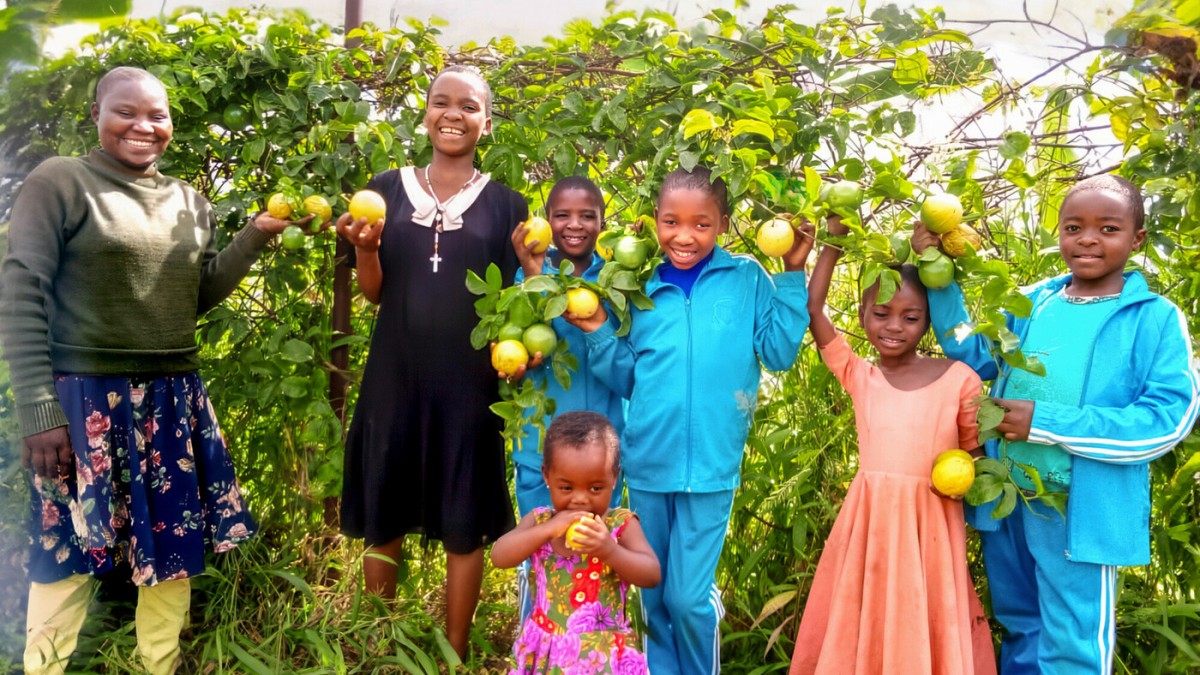
“The continued support from Chalice has significantly impacted the lives of the children in our schools and orphanages,” says Sister Celine, Neema site director. Before, “many school-going children would miss school due to hunger or a lack of motivation,” she says.
“However, with the assurance of receiving nutritious meals and engaging in meaningful activities like gardening, student attendance has improved significantly.” Better attendance leads to higher pass rates, and children feel more engaged with their studies.
So, the Neema team planted farms and gardens at Chandarua Primary and the Neema Visitation Orphanage to provide nutritious meals for children. They planted nutrient-rich vegetables like cabbage, tomatoes, amaranth, carrots, bell peppers, eggplant, radish, and cabbage. Each is nutritious, easy to cultivate, and local.
At both farms, they got the children and staff involved. “This hands-on experience provided the learners with practical knowledge of agriculture,” says Sister Celine. “The garden has become not only a source of food but also a valuable educational tool.”
At each of the schools that host the program, “teachers have reported improvements in the children’s behavior, concentration, and overall health. The regular, balanced meals have ensured that the children no longer come to school hungry, which has made a noticeable difference in their ability to engage in class.”
“The link between nutrition and academic success cannot be overstated, and the Chalice-supported programs have proven to be a powerful tool in improving both. Children who are well-nourished are better able to focus on their studies, participate in class activities, and achieve their full potential.”
Her team see the children’s ownership and responsibility for their farms, teaching them life-long skills like teamwork, problem-solving, and time-management, in addition to farming knowledge.
“The sense of pride that comes from seeing the fruits of their labour has also boosted their confidence and motivation to succeed in other areas of their lives.”
“The success of these programs would not have been possible without the generous support of Chalice, and for that, we are incredibly grateful,” she says. “The future looks bright. Together, we are making a difference, one step at a time.”